



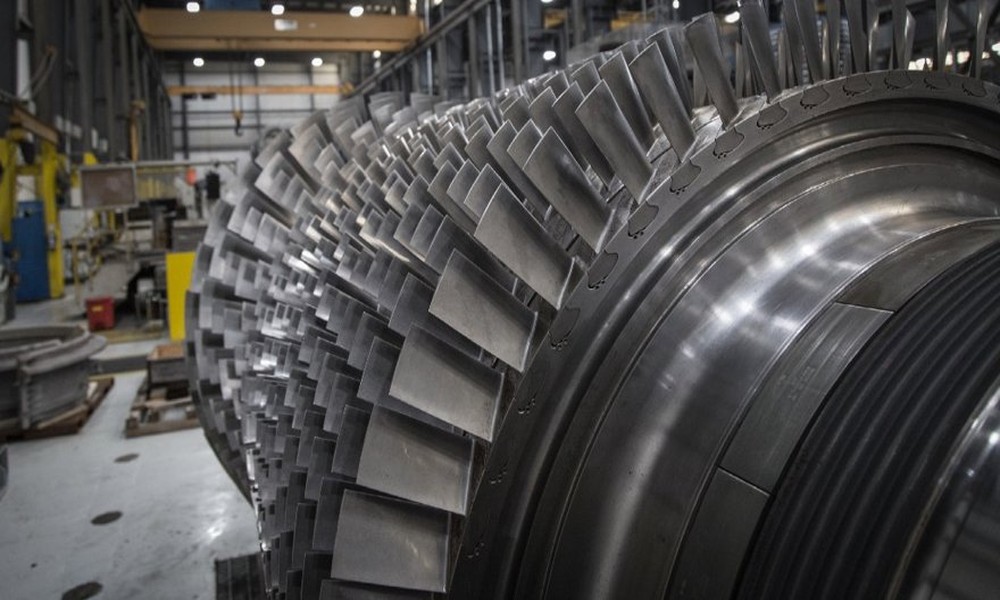
The continued reliability of modern power plants relies heavily on the condition of their rotating machinery. By their very nature, steam and gas turbines put a great deal of strain on their rotors, blades, etc.
Know that the integrity of these parts is gradually weakened by years of hard use. They’re exposed to extremely high temperatures and sporadic operational disruptions.
If left unchecked, such wear can lead to unforeseen outages or expensive downtime in addition to decreasing efficiency. A focused approach to rotor as well as rotating component service is necessary to reduce these dangers.
Experts provide shop-based as well as onsite services for rotors up to 100 tons. They utilize specialized services and have a team of technicians experienced in OEM-level procedures.
Operators can pick the controlled atmosphere of the service centers, especially on complex tasks. Or they can have crucial gas turbine repair solutions done immediately at their factory to minimize downtime.
Proficiency in Rotor Overhaul
Any turbine system’s core is its rotors. These transfer energy while keeping exact alignment even under the most severe stresses.
Problems, including cracking, bowing, or material fatigue, could appear over time. To identify the underlying cause of every issue. The overhaul process uses sophisticated diagnostics. Like non-destructive testing, thermal evaluations, and engineering simulations.
Corrective straightening methods are used when bowing occurs. Thus, restoring the rotor’s geometry by regulated mechanical and thermal processes.
Because tolerances may indicate whether the unit operates smoothly or experiences harmful vibration. These procedures need a high level of precision.
Experts restore rotors to a service-ready state with increased operational life. It is achieved by combining knowledgeable specialists with cutting-edge alignment technology.
Restoration of Materials and Welding
These are among the most difficult parts of GT maintenance. Teams who are skilled in a variety of welding methods are required. Including TIG, submerged arc, and laser-guided procedures. Each of which is selected according to the composition of the material and the needs of the operation.
Welding activities are carried out under close metallurgical control. Whether they are repairing degraded surfaces, filling up localized cracks, or combining completely new sections.
By avoiding residual strains and reducing distortion. Heat treatment, both before and after welding, guarantees that the proper microstructure is preserved.
For rotors that are subjected to continuous heat cycling, these procedures are essential. Especially when minor metallurgical irregularities might reduce service life.
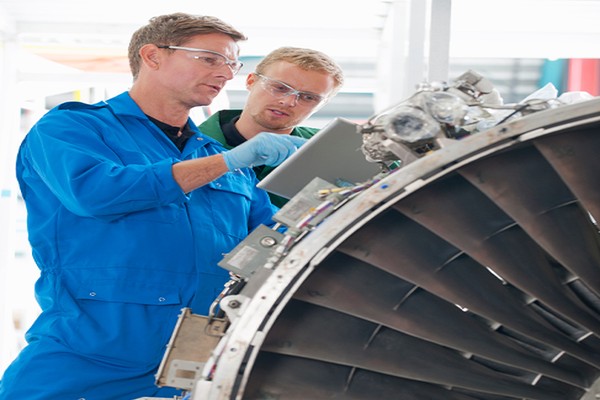
Read from https://blog.ucs.org/paul-arbaje/how-gas-plants-fail-and-lead-to-power-outages-in-extreme-winter-weather/ because this might happen without immediate component restoration.
Upgrades and Component Replacements
In certain cases, complete replacement is the most economical course of action. Even though some repairs can prolong the life of current components.
From single blades to whole steam paths or freshly forged rotors. Experts provide and install replacement rotating parts made to precise requirements.
Areas of specialization include:
- Replacement of Blades and Buckets: These are installed to provide fatigue resistance and aerodynamic efficiency.
- Repairs for Couplings and Journals: These include surface treatment, re-sleeving, and machining to ensure accurate fits and seamless functioning.
- Erosion Shielding: The process of applying barriers to prevent particle erosion and increase the lifespan of components.
- Steam Path Modernization: Engineering improvements that maximize steam flow, minimize leaks, and boost overall efficiency.
On-Site Services
The capability to carry out maintenance on-site is a big plus for operators who are handling strict outage timetables. There are mobile teams that can do extensive fixes right at the customer’s location.
They have their welding rigs, portable machining units, and balancing equipment. With this, GTs are brought back online more quickly. Also, repair cycles are shortened, and transportation problems are decreased.
Most field services provide the same level of quality as their shop repairs. Whether they involve small surface adjustments or significant component replacements.
No matter where the work is done. Remote engineering oversight supports every process to guarantee that clients obtain consistent results.
Testing and QA
Without strict quality control, no repair can be considered complete. Every rotor is subjected to thorough examinations at various phases. These include surface integrity tests, ultrasonic scans, and dimensional checks.
To ensure that vibration levels stay within allowable bounds during simulated operating conditions. High-speed balancing is frequently used.
Every customer also receives comprehensive documentation. This details the processes carried out, inspection findings, and suggestions for continued observation. Operators are guaranteed to have total faith in the repaired component because of this transparency.
You can read here an example of what experts suggest. In this way, blackouts can be prevented.
An Engineering-Driven Method
Every repair is the result of a team of experts working closely with clients and field technicians. They are responsible for carrying out analytical modeling, confirming stress levels, and suggesting repairs.
Their expertise can forecast how alterations will function in real-world scenarios. They’re equipped with sophisticated methods like computational fluid dynamics and finite element analysis.
Additionally, engineering offers lifecycle assessments. They counsel operators on how to strike the greatest balance. Especially between short-term fixes and long-term replacement plans.
They remove uncertainty and ensure that every repaired component satisfies performance and safety requirements. It is achieved by combining repair implementation with engineering supervision.
Conclusion
More than just normal maintenance is needed to address the problems facing modern power generators. Professional solutions combining engineering precision, metallurgical competence, and field experience are needed.
This idea is embodied in the rotor component repair services. Journal machining and bow correction to complete rotor restoration and steam path modifications are provided. With the intention of preserving long-term investments, reducing downtime, and regaining performance.