

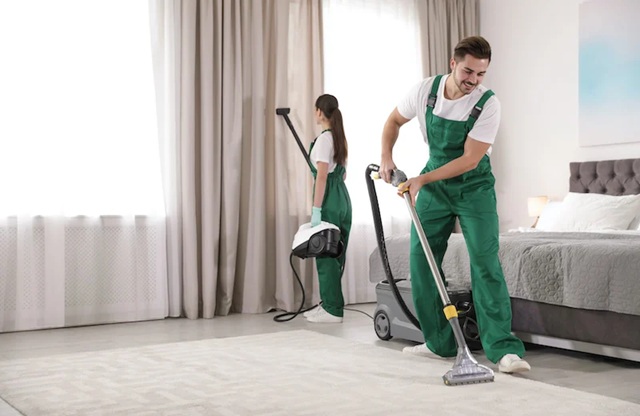
Commercial carpet cleaners represent a remarkable convergence of physics, chemistry, and engineering, designed to address one of civilisation’s more prosaic yet persistent challenges: maintaining cleanliness in spaces where hundreds or thousands of feet traverse daily. Consider for a moment the carpet fibres in a hotel lobby or office corridor, each strand accumulating microscopic particles of soil, skin cells, pollen, and the countless other materials that accompany human activity. In Singapore’s tropical environment, where humidity hovers around 80 percent year-round, these accumulations become breeding grounds for microorganisms. The task of restoring these surfaces to pristine condition requires machines that harness fundamental principles of thermodynamics and fluid dynamics with elegant efficiency.
The Science Behind Extraction Technology
At the heart of effective commercial carpet cleaners lies the principle of hot water extraction, a process that demonstrates how temperature, pressure, and chemical action work in concert to achieve results impossible through mechanical agitation alone. When heated water, typically between 80 and 95 degrees Celsius, contacts carpet fibres under pressure ranging from 200 to 800 PSI, several phenomena occur simultaneously. The heat reduces water’s surface tension, allowing deeper penetration into the carpet pile. Pressure forces the cleaning solution through the carpet backing, loosening soil bonds that have formed over weeks or months of foot traffic.
The extraction phase reveals equally fascinating physics:
- Vacuum systems generating negative pressure of 10 to 15 inches of mercury create sufficient force to draw contaminated water upward against gravity
- Dual-stage vacuum motors in professional commercial carpet cleaners process hundreds of litres per hour, separating liquid from air through cyclonic action
- Recovery tanks designed with specific geometries prevent foam formation that would otherwise compromise vacuum efficiency
Truck-mounted Commercial carpet cleaners in Singapore demonstrate these principles at their most powerful, with engine-driven systems producing heat and suction impossible to achieve with portable units. These machines can maintain water temperature throughout extended cleaning sessions, crucial since cleaning efficiency drops precipitously as temperature falls below 70 degrees Celsius.
Chemical Interactions and Molecular Attraction
The cleaning solutions employed by commercial carpet cleaners operate through molecular interactions as precise as any laboratory experiment. Surfactant molecules possess a remarkable dual nature: one end attracts water whilst the other attracts oils and greases. When these molecules encounter soiling on carpet fibres, they position themselves at the interface between dirt and fibre, gradually surrounding soil particles and suspending them in water where extraction removes them.
pH balance matters enormously in this molecular dance. Most carpet fibres prefer neutral to slightly acidic conditions, typically between pH 5 and pH 7. Professional commercial carpet cleaners understand this chemistry and employ multi-step processes that first apply alkaline pre-sprays to break down soiling, then follow with acidic rinses that neutralise residues and restore optimal pH levels.
Modern cleaning chemistry has evolved to include:
- Encapsulation polymers that crystallise around dirt particles, allowing mechanical removal through vacuuming
- Enzyme-based solutions that catalyse the breakdown of proteins, starches, and other organic materials
- Optical brighteners that absorb ultraviolet light and re-emit it as visible blue light, counteracting the yellowing that occurs in aged carpets
- Anti-microbial agents that inhibit bacterial and fungal growth, particularly valuable in Singapore’s humid climate
Specialised Applications Across Industries
The demands placed on commercial carpet cleaners vary dramatically across different environments, each presenting unique challenges that illuminate the versatility required of modern cleaning technology. Hotels, where guest perception directly impacts business success, require commercial carpet cleaners capable of operating during off-hours without disturbing occupants. Low-moisture systems using encapsulation technology have gained favour in these settings, with drying times of 30 to 60 minutes allowing cleaned areas to return to service quickly.
Retail spaces present different complications. High traffic volumes compress carpet pile, creating traffic lanes where soiling becomes embedded deep within fibres. Commercial carpet cleaners addressing these conditions employ rotary agitation machines with contra-rotating brushes that mechanically lift compressed fibres whilst working cleaning solutions deep into the pile structure.
Office environments benefit from commercial carpet cleaners that offer:
- Quiet operation permitting cleaning during business hours without disrupting work
- Rapid extraction cycles that minimise moisture remaining in carpets
- Zone-based cleaning allowing high-traffic areas to receive attention whilst storage spaces are addressed less frequently
- Scheduled maintenance programmes that prevent the accumulation of soiling requiring intensive intervention
Medical facilities and childcare centres require commercial carpet cleaners employing sanitising technologies that eliminate not merely visible dirt but pathogenic microorganisms. High-temperature extraction combined with EPA-registered antimicrobial treatments addresses these hygiene requirements whilst respecting the chemical sensitivities common in healthcare environments.
Equipment Selection and Performance Metrics
Evaluating commercial carpet cleaners requires understanding several quantifiable performance metrics. Water lift, measured in inches of mercury, indicates vacuum power, with professional machines typically achieving 10 to 15 inches. Flow rate, measured in litres per minute, affects how quickly carpets are saturated and extracted. Heat output, measured in BTUs or kilowatts, determines whether machines can maintain optimal temperature throughout extended cleaning sessions.
Portable commercial carpet cleaners suitable for Singapore’s high-rise commercial buildings typically feature tank capacities of 15 to 25 litres, dual vacuum motors producing combined airflow of 200 to 300 CFM, and heating elements maintaining water temperature above 70 degrees Celsius. These specifications represent the minimum capabilities necessary for professional results in demanding commercial environments.
The Observable Universe of Clean Carpets
The transformation achieved by skilled operators using quality commercial carpet cleaners approaches the miraculous when viewed at appropriate scale. Carpets dismissed as irredeemably stained emerge renewed, their original colours restored and their pile structure revitalised. This renewal extends beyond aesthetics, improving indoor air quality by removing allergens whilst extending carpet lifespan by years. The investment in professional Commercial carpet cleaners becomes not merely an operating expense but a strategy for preserving capital assets and maintaining environments where human activity can flourish in comfort and health.
