

Sustainability is a word that gets stretched thin. It shows up on the packaging of products made in ways that are anything but, and it’s become so overused in marketing that many consumers have understandably tuned it out. So let’s not start there.
Let’s start with what’s actually in a mainstream synthetic fragrance, and work outward from there.
What’s in the Bottle You’re Probably Not Thinking About
The fragrance industry is one of the least transparent consumer product categories in the world. In most jurisdictions, the word “fragrance” or “parfum” on an ingredient label can legally cover hundreds of individual chemical compounds, none of which need to be disclosed. Some of those compounds are benign. Others – including certain synthetic musks and phthalates – have raised concerns among researchers studying endocrine disruption and aquatic toxicity.
That’s not a fringe position. The European Union has banned or restricted dozens of synthetic fragrance ingredients that remain in use elsewhere. The question of what exactly is in mass-market fragrance, and what its long-term effects are on human health and ecosystems, is genuinely unsettled.
A perfume built from 100% botanical and naturally derived ingredients doesn’t carry that uncertainty in the same way. When Wit & West says every ingredient is natural, that’s a statement you can trace – to plants, to harvesting methods, to extraction processes. The supply chain is legible.
Small Scale, Lower Footprint
Industrial fragrance manufacturing operates at enormous scale – thousands of liters per batch, global distribution networks, massive packaging operations. The environmental footprint of that model is substantial regardless of what’s inside the bottle.
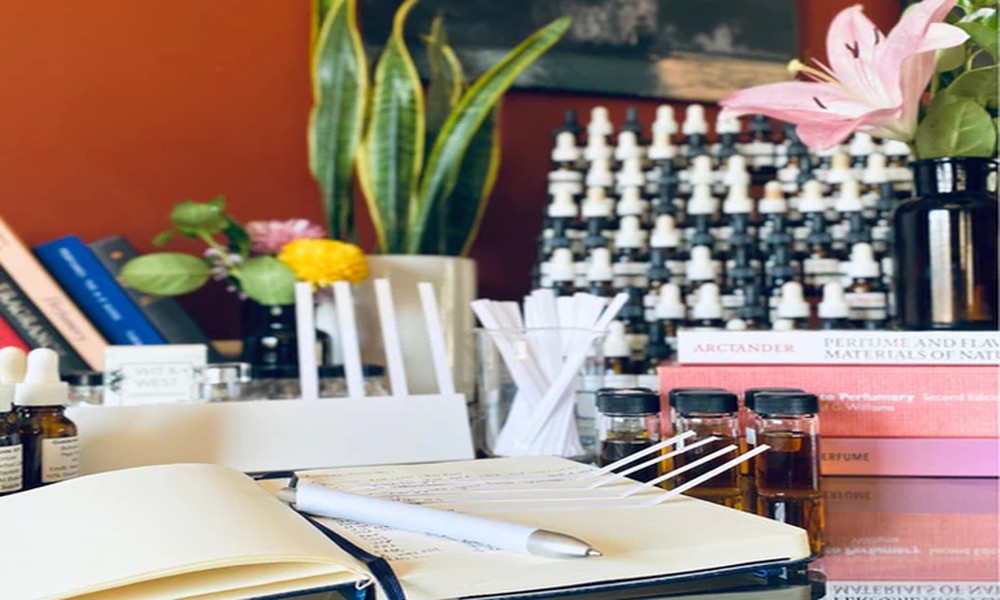
Small-batch production in a studio in Colorado is a different matter. Batches are small. Production is localized. The energy inputs are modest. Materials are ordered in quantities matched to production needs, which reduces waste. There’s no warehousing operation sitting on inventory for months.
This isn’t a claim that artisan perfumery is carbon-neutral or without environmental impact – everything has a footprint. But the scale differential is real, and it matters when you’re thinking about the cumulative effect of consumer choices.
Natural Ingredient Sourcing and the Sustainability Nuance
Here’s where it gets genuinely complicated: some natural perfume ingredients carry their own sustainability challenges. Sandalwood from India has been over-harvested to the point of strict government regulation. Wild oud (agarwood) is critically endangered. Even rose and jasmine, while not endangered, represent crops that require significant land and water.
Responsible natural perfumers navigate this carefully. Sustainable and ethical sourcing – choosing materials from cultivated rather than wild-harvested sources where necessary, working with suppliers who meet recognized environmental standards – is not optional at this level of craft. It’s a prerequisite for integrity.
For a perfumer like Wit & West, whose entire brand identity is built on the authenticity of their botanical ingredients, the sourcing question isn’t a PR exercise. It’s foundational. Every ingredient in the bottle is there because a human being made a deliberate decision to put it there – and that means accountability for where it came from.
The Longevity Paradox
One of the sustainability arguments sometimes made for synthetic fragrances is that they last longer, meaning you use less product over time. It’s a reasonable point worth engaging with honestly.
Natural perfumes, including those from Wit & West, typically last two to six hours on skin – shorter than many synthetic fragrances. That’s a real difference. But it’s worth examining what that “longer lasting” synthetic performance actually involves: synthetic musks and fixatives that are poorly biodegradable, that accumulate in aquatic ecosystems, and that have been detected in human tissue samples in multiple studies.
Longevity achieved through accumulative chemistry isn’t a straightforward environmental win. The two to six hours of a natural fragrance, made from biodegradable botanical materials carried in USDA organic grape alcohol, is a different kind of performance – one that ends cleanly rather than lingering in ecosystems.
Supporting a Different Kind of Economy
When you buy from an artisan like Wit & West, you’re not contributing to a supply chain optimized purely for shareholder returns. You’re supporting a husband-and-wife operation that makes every fragrance by hand, in-house, in Colorado. You’re supporting the farmers and distillers and extractors who produce genuine natural raw materials – often small producers in France, Bulgaria, India, and elsewhere who represent centuries of traditional knowledge.
You’re choosing, in the most literal sense, where your money goes and what it sustains.
The mainstream fragrance industry will continue to function without your participation. But the artisan natural perfumery world – where the ingredients are real, the production is honest, and the people making the product are the same people who designed it – exists partly because enough people decide it matters.
Sustainability as a Daily Practice
The most durable form of sustainability isn’t a single dramatic gesture. It’s a series of ordinary choices, made consistently, in favor of things made well rather than made cheaply. Fragrance is a daily ritual for most people who wear it. Choosing a natural, small-batch, artisan option for that daily ritual is a quiet but genuine act of alignment between values and behavior.
